47 Brilliant Real Estate Marketing Fun Ways to Skyrocket your 6-fig Career Now!
47 Brilliant Real Estate Marketing Fun Ways to Skyrocket Your 6-Fig Career Now!
In this article, I will share 47 Brilliant Real Estate Marketing Fun Ways to Skyrocket Your 6-Fig Career Now that will help you generate a six-figure income. However, in real estate, time is money. Therefore, you either have time, or you have money. If you have time, most new agents generate leads organically. But, if you have money, you can pay for leads. Below please find a list of 47 Brilliant Real Estate Marketing Fun Ways to Skyrocket Your 6-Fig Career Now! However, I only ask in return if you can subscribe to my youtube channel and if you can subscribe to the newsletter. I like to help real estate agents like yourself earn 6-figure incomes.
Generate Hot Leads Using Zillow: The #1 Real Estate Marketing Platform-Zillow is not an inexpensive way to get leads but it is an opportunity to get massive leads.
Write Listing descriptions that Sell. The money is in the details. Listing descriptions are very important when posting your listing online. It is just as important as professional photography. There is an artificial intelligence service called Nila June that can write your listing descriptions for you. Check it out here. Nila June
Make a Viral Real Estate Video- Making a viral real estate video sounds easy but can be difficult to do. However, if you are creative and energetic, it is possible. The best ideas are parody rap videos, cat videos, and of course cute babies doing cute things.
Automate your lead process to develop repeat customers and referrals-It is extremely important that you collect data on every potential client so that you can add them to your customer relationship management software (CRM), Next, you will send them updates on the market and real estate news on a regular basis.
It can be very effective if you have the money to invest. For example, a $20,000 investment per month can yield you enough business to generate an estimated $500,000 in gross commission per year. However, you would need at least $250,000 in operating expenses for the first year plus an additional $100,000 to hire a 24 hour/7 days a week staff to manage the lead-in take and follow up.
47 Ways to Market Your Real Estate Business
Use great SEO Keywords on your website or hire an SEO specialist to check your website on a regular basis to make sure you reach and stay on page one of google. As a result, you can earn a lot of commission dollars, However, it is expensive to maintain especially when google changes its algorithm,
IDX Website
Have an IDX website
Next, try an IDX website will allow you to have all the listings in the MLS stream on your page. Although this may sound expensive, it is not. You can get an affordable IDX website from any of the following companies.
*Proagent
*Real Geek
Even though there are several website companies, make sure you choose or create a website that has IDX features. Keep in mind, the IDX feature is only if you want your customers to search for homes on your website.
Drip Marketing Emails for Your Real Estate Leads using a CRM like Mailchimp or Constant Contact, and lastly, Real Producers. CRM is crucial for your business and it is one of the ways to skyrocket your success on the road to a 6-figure income.
Start a Direct to Door Marketing Campaign with Door Hangers- If you want a soft real estate marketing idea, here it is. You can drop door hangers in your farm area (target Neighborhood), instead of door knocking or spending thousands of dollars to mail them. Above all, put on your walking shoes, because you will need to do this 3-4 times a week to see results.
Use Real Estate Marketing Postcards-If you have real estate marketing dollars to spend, then invest in a postcard campaign to mail to your farm area. The key concept is to make your postcard large and attractive with bright colors and a good message. Lastly, you should send the cards out once per month to see results.
Target local homebuyers with online ads. This is the most expensive of the 47 real estate “whooping” marketing ideas to skyrocket you 6-figure career.
YouTube
Kick Butt Marketing Ideas for Free
Use Youtube or Facebook live to talk to your followers or use it to create new followers. Live streaming is an organic approach and it can take several months or years to see results. However, I encourage you to use this method alongside other real estate marketing ideas.
Moving along, using Pinterest as a Valuable Real Estate Social Marketing Tool can prove useful.
Social Media
Social Media is “going where the people are”. Again, in order to market your real estate business you need to have visibility on social media.
Come Up With A Great Slogan-If you can think of a catchy phrase, your potential clients can identify you with the slogan. Although, slogans are great, make sure it is not your total plan. It is an excellent idea to use for an event or a workshop.
Generate Your Real Estate Leads Using Bing
Try Real Estate Banner Advertising – In other words. I remember in the late ’90s, and early 2000’s banner ads were everyone in marketing talked about. Since then, banner ad marketing has changed. I would not consider them very popular unless you are using Adwerx or some other program to retarget your database.
Facebook Advertising for just $5
Create a Client Testimonial Packet- I have an estimate of 65 pages of my credentials, certifications, testimonials, and client letters to prove my experience and capabilities.
Real Estate Email Newsletters are an awesome way to keep your client and leads up to date on the market, real estate news, and your career. It is important to communicate on a consistent basis with your clients and prospects. Lastly, you are able to keep your family and friends in the loop for possible referrals and future business.
Spend More on Your Real Estate Website
Invest in your community to generate strong, top-of-the-mind referrals.
Hand-Written Notes
Hand-written notes can distinguish you from your competition
Consider selling the furniture as a turn-key package.
Build hype before it hits the market- Coming Soon listings have become popular in competitive markets. First, you have an opportunity to showcase the listing before it hits the market which creates excitement. Second, you can begin to collect offers or answer questions which can speed up the sales process.
Additionally, Craft a personalized message for your buyers.
Last Chance to Learn Real Estate Marketing
Use pre-printed custom post-it notes to find motivated sellers.
Make your listing memorable with one stand-out item that buyers can’t forget.
Showcase your charitable side. An ultimate way to help your career is to help others. You should donate your time and resources to neighborhood non profits and community events.
Of course, send Postcards That are “Fridge-Worthy”
Create a blog that answers clients’ questions.
Master the Subject Line (for Email Marketing)
If they can’t come to the open house, bring the open house to them with a video tour.
Have a Get Together
Furthermore, grow your network with regular get-togethers.
Start building your email list now, don’t wait
Manage your online reputation.
Find Your Niche.
Most importantly, buy a specific domain name for your property.
Use Professional Photography to win more listings and sell them faster
How to get your real estate license in every state. Each State has its qualifications, but the requirements are broadly similar overall. Below I outline each State’s qualifications, but check the State’s website for more detailed information. This page will be a work in progress until every State’s requirements are listed and updated. Best of luck!
How To Get Your Real Estate License In Pennsylvania
How to Become a Real Estate Agent in Pa
Qualifications and Steps
To become a Real Estate Agent in PA, you must be at least 18.
Pass the Pennsylvania real estate salesperson exam, with 110 questions covering State and national requirements. For more information, see the PSI candidate information bulletin.
To obtain a real estate license in Maine, you need to follow these general steps:
Meet the eligibility requirements: In Maine, you must be 18 and have a high school diploma or equivalent.
Complete the required pre-licensing education: You must complete 60 hours of approved real estate education from an accredited institution. These courses cover real estate principles, practices, contracts, finance, and laws.
Pass the state licensing exam: After completing the pre-licensing education, you must pass the Maine real estate licensing exam. A third-party testing company administers the exam called Pearson VUE. You must schedule and take the exam at one of their testing centers.
Apply for your license: Once you pass the licensing exam, you can submit your license application to the Maine Real Estate Commission. The application includes providing personal information, education details, exam results, and a fee.
Complete a background check: As part of the application process, you must undergo a criminal background check. This involves submitting fingerprints for a state and national background check.
Obtain errors and omissions insurance: Before issuing your license, you must obtain errors and omissions (E&O) insurance. This insurance protects against liability for mistakes or negligence in real estate activities.
Join a brokerage: In Maine, you are required to work under the supervision of a licensed real estate broker. Once you find a sponsoring broker, they will provide the necessary forms to affiliate with their brokerage.
Activate your license: After your application is approved, you will receive your real estate license. You must submit an activation form and pay the required fee to activate it.
It’s important to note that the specific requirements and procedures may vary, so it’s advisable to consult the Maine Real Estate Commission’s website or contact them directly for the most up-to-date information.
Next, How to Get Your Real Estate License in North Carolina.
North Carolina
1. Understand the Requirements
First, meet the essential eligibility criteria before becoming a real estate agent. To apply for a license in North Carolina, you must be at least 18 years old and possess a high school diploma or equivalent.
2. Complete Pre-Licensing Education
The first critical step is to complete a state-approved pre-licensing course. North Carolina requires aspiring real estate agents to undergo 75 hours of pre-licensing education. These courses cover essential topics such as real estate principles, contracts, property management, etc.
Choosing a reputable school or online platform for your pre-licensing education is essential. Verify that the course you select is approved by the North Carolina Real Estate Commission (NCREC) to ensure compliance with state regulations.
3. Pass the Pre-Licensing Exam
Next, upon completing the pre-licensing course, you must pass a final exam. The exam evaluates your understanding of the course material and prepares you for the challenges of a real estate career. The school or organization where you took the course will administer the exam.
4. Submit Your Application
Moreover, with the pre-licensing education and exam under your belt, it’s time to submit your license application. Start by obtaining a criminal background report, as North Carolina requires fingerprinting for all applicants. Follow the instructions provided by the NCREC to schedule this process.
Next, complete the application form on the NCREC website. This form will require you to provide personal information, educational details, and required documentation. Be thorough and accurate in filling out the application to avoid delays.
5. Take the State Exam
Also, once the NCREC approves your application, you will receive instructions on scheduling the state licensing exam. The exam is administered by a third-party testing provider authorized by the NCREC.
Prepare diligently for the exam, as it will test your knowledge of North Carolina real estate laws, regulations, and practices. Passing the state exam is crucial for obtaining your real estate license.
6. Affiliate with a Licensed Brokerage
Furthermore, real estate agents in North Carolina must work under a licensed real estate brokerage firm. Research various brokerages to find the one that aligns with your goals and offers a supportive environment.
So, upon passing the state exam, affiliate yourself with the brokerage of your choice. This affiliation will give you access to valuable resources, training, and mentorship as you embark on your real estate career.
7. Complete Post-Licensing Education
Congratulations on obtaining your real estate license! But your learning journey doesn’t end there. You must complete a 30-hour post-licensing course within the first year of licensure. This course provides additional training and practical knowledge that will prove invaluable in your career.
It’s important to note that the specific requirements and procedures may vary, so it’s advisable to consult the North Carolina Real Estate Commission’s website or contact them directly for the most up-to-date information.
Next, How to Get Your Real Estate License In Vermont.
Vermont
Research Vermont Real Estate License Requirements
Before you start the licensing process, it’s essential to familiarize yourself with Vermont’s specific requirements. Visit the Vermont Real Estate Commission’s website for the most up-to-date and accurate information. Understanding the prerequisites will help you plan your path and avoid potential setbacks.
Enroll in a Vermont Real Estate Pre-Licensing Course
So, like most states, Vermont mandates the completion of a pre-licensing course from an approved education provider. Find reputable institutions offering comprehensive pre-licensing courses covering essential topics, such as real estate principles, practices, contracts, and laws.
Prepare and Pass the Vermont Real Estate Exam
Once you’ve completed the pre-licensing course, it’s time to prepare for the Vermont real estate exam. The test will assess your understanding of critical real estate concepts and state-specific regulations. Utilize practice exams and study guides to enhance your knowledge and increase your chances of passing the exam with flying colors.
Choose a Licensed Vermont Real Estate Brokerage
Next, after passing the exam, you must affiliate with a licensed real estate brokerage in Vermont. Research various brokerages and consider reputation, support, training opportunities, and commission structures. Joining the right brokerage can significantly impact your career trajectory.
Submit Your Application for a Vermont Real Estate License
Complete the required application and submit it to the Vermont Real Estate Commission. Double-check that all necessary documents, fees, and supporting materials are included. A well-organized application will expedite the process and avoid unnecessary delays.
Undergo a Background Check
You’ll likely need a background check as part of the licensing process. This step ensures applicants meet the State’s character and fitness requirements for a real estate license.
Attend a Real Estate Licensee Orientation
If the Vermont Real Estate Commission requires, attend a licensee orientation session. This orientation will provide crucial information about your obligations and responsibilities as a licensed real estate agent in Vermont.
Secure Errors and Omissions Insurance
Also, Some brokerages may require you to obtain Errors and Omissions (E&O) insurance before commencing your real estate activities. This insurance protects you from potential legal and financial liabilities arising from errors in your professional services.
In conclusion, Achieving your real estate license in Vermont is an attainable goal with the proper preparation and dedication. Research the requirements thoroughly, complete a reputable pre-licensing course, and ace the Vermont real estate exam. By affiliating with a reputable brokerage and submitting a well-organized application, you’ll be well on your way to a successful career in Vermont’s real estate market. Keep learning and growing as a professional, and embrace the exciting opportunities that come your way. Good luck on your journey to becoming a licensed real estate agent in the beautiful Green Mountain State!
159 Free Real Estate Investing Ideas for Beginners in 2024. Do you want to invest in Real Estate? Do you have an investment plan? Are you a beginner investor? Next, do you want to create a dynamic plan to invest in Real Estate but are unsure how to do it? Are you confused about all the investment options? I want to talk about Real Estate investing for beginners today. Here is my way of understanding how a beginner can start investing in Real Estate. To hear more, check out my short video.
The Real Estate investing business is the place to be. Humans will always need a place to live in the best and worst times. Therefore, It is one of the many reasons why so many beginning investors are searching the internet to educate themselves on investing in Real Estate.
Keep reading to learn why you should consider investing in real estate. But, of course, it is best to seek advice from a professional before taking the plunge into the unknown.
Free Real Estate Investing Ideas
One of the main reasons is to generate passive income.
Real Estate Investing can be an excellent way for beginners to make short—and long-term money. It can sometimes be a low-risk investment with a high return on investment (ROI). However, starting can be very stressful for beginners.
Therefore, I’d like to help you by showing you 145 real estate investment ideas, strategies, advice, and tips for beginners. You will learn about each investment strategy and find the best fit for you and your risk tolerance level.
Real Estate Investment Ideas
Vacant Land
Vacant Land-Small lots in most Urban Cities will cost you under $20k, and for some up-and-coming areas, you will fare well under $10k. In addition, you can take advantage of several opportunities, such as renting the land for parking, storage, or outdoor events.
Tiny Homes
Tiny Homes– Another great idea is to build a small home on vacant land. It can be inexpensive, and It could cost you between $10-$30k for a house under 500 sq ft.
Copop Apartment
Co-op Apartment– Purchasing a co-op apartment requires the purchase of shares in a cooperative building or complex. Then, you can invest in a unit and rent it out for the income. First, however, you must check the rules and ensure your idea is acceptable to the board of directors.
Condo Apartment
Condo Apartment: If you prefer to be hands-off regarding lawn mowing and snow removal, a condo is an investment that requires light lifting. However, remember that you will still need to do maintenance and repairs in the unit. You must also budget for the Home Owners Association (HOA). These fees typically go up yearly, along with annual assessments for extensive repairs such as new roofs, new windows, balcony repairs, and structural damages. The last thing to verify is the financials of the condo association and the management structure. All condo boards are different, and some have mismanaged the funds. However, if the financials check out and there is a solid experience condo association, investing in a condo is an excellent start for a beginner.
Single-Family
Single Family– A single-family home is the most popular real estate investment for flipping houses. But for inexperience, it is the most likely to end your investment career before you begin if you do not calculate your numbers correctly. Above all, knowing how much it will cost you to flip is essential, especially with the current high inflation rates. If done correctly, you can earn a minimum of $10k-$250k plus on your first deal.
Plex
Duplex– A duplex is two apartments in one building, side by side or back. I encourage you to live in one and rent the other. Living in one and renting the other is called House Hacking. Therefore, the rental income must be high enough to pay off your mortgage and taxes for the entire unit. Essentially, you would be living rent-free. It is a perfect strategy for single couples with no children or someone with small children.
Triplex– The same as above, except three units instead of two.
Quadplex– It is four units instead of two or three. A quadplex is the last level for qualifying for an FHA loan. An FHA loan is a mortgage with a lower down payment.
Apartment Building
Apartment Building– This would be a building with five-plus units. An apartment building is the fastest way to increase your unit numbers in less time.
Small Commercial
Small commercial, daycares, auto shops, and unit retail stores would be considered small commercials. Renting this space to business owners has its plusses and minuses. However, vetting the business for long-term longevity and avoiding start-ups is essential.
New Construction– New construction would be an excellent project for going big or home. New Construction, however, is time-consuming and highly stressful. It requires a legal team, a construction team, a design team, and more. There are so many moving parts that the entire project can see delays by years if one piece is out of order. If you have excellent project management skills and nerves of steel, then this would be the way to go.
Garages– Every major city and even some smaller ones are short of parking spaces. Buying garages and equipping them with electric pumps, cameras, and lighting will generate a high income. It is also a very low-maintenance investment.
Air BnB
Air BnB– This investment requires no ownership. You can rent a home in the center of any significant city and air BnB every one of the rooms. These are considered short-term rentals, and they are in high demand. It is also very profitable. Keep in mind that you need to have permission from the owner first.
Wholesaling or Assignments: This real estate investment requires no money or ownership. Instead, you spot low-cost, high-profit purchasing opportunities by searching online, networking, driving around communities, the MLS, and other home-buying apps. Once discovered, you put it under contract and then find a buyer. Once you find a buyer, you will transfer the agreement to the new buyer at a higher amount than your contract price. The difference is your profit. In conclusion, remember that some areas require a wholesaler license, like Philadelphia, Pa.
Timeshare– This is a 70-’80s throwback investment opportunity; There is earning potential if you buy low and rent every year to travelers.
Real Estate Investment Trust
REIT-Real Estate Investment Trusts are similar to mutual funds in that you own a percentage of an extensive portfolio of professionally managed real estate investments. Moreover, it would be best if you analyzed the risk before investing. There are also fees to purchase the shares.
Crowdfunding Concept. Paper Cut Out Human Figures Around The Stack Of Hundred Dollar Bills
CrowdSource Funding- If you have several thousand dollars and want to be hands-off on the acquisition side of real Estate, crowdsource Funding is an option. Here, you can become a banker and invest in someone else with the expertise.
Senior Housing- is the most overlooked investment idea for beginners, but it is worthy of further research. Senior Housing involves building a small community of 55+ homeowners. Lastly, it is prevalent in Florida but becoming increasingly popular in the Northern States, such as Pennsylvania, particularly the Poconos.
Green Housing
Multi-Purpose or Mixed-Use
Large Commercial-Industrial Space, Large Retail, Large Office Buildings.
Lease Options- Lease with the option to buy.
Sweat Equity Partnership can do all the work and heavy lifting while another person or group provides the financing. In the end, you share the profits at an agreed-upon split. This is ideal for beginners in real estate investing.
Real Estate Syndication
Small Farms
Mobile Homes
Manufactured Homes
Online Real Estate Platform
Vacation Rental
Real Estate Tax Lien-You can purchase real estate at a tax auction at discounted prices. However, you must pay cash. Lastly, you should contact a professional regarding title insurance for tax lien properties.
Discounted Note lending is an advanced concept, and it doesn’t hurt to know it’s available in the future.
Real Estate Investment Groups
Be a Lender
House Hack
Invest in Real Estate in Mutual Funds
Advantages Of Investing in Real Estate
Critical advantages of investing in Real Estate include:
Cash Flow
Increase in property value over the long term.
Flexibility
A significant benefit is reducing taxable net income; tax deductions include property operating expenses and taxes, mortgage interest, and depreciation expenses.
Less volatile than the stock market
Disadvantages Of Real Estate Investing
Real Estate Investing for beginners requires nerves of steel. It’s not the best decision for everyone. The disadvantages of investing in Real Estate include:
Cash is King, and you need lots of it in Real Estate. (Unless you choose wholesaling/assignment deals)
Real Estate is not liquid. If you have an emergency and require immediate cash, selling the property can take a long time.
However, vetting tenants, maintaining the property, hiring contractors, and collecting rent can be challenging. As a result, most experienced investors hire Property Managers.
Therefore, it would be best to constantly educate yourself on the latest trends in construction, real estate law, taxation, property management, and more.
Below are some standard Terms to know for Real Estate Investing ideas for beginners:
A-B
Active
The listing is active and on the market in the MLS. Related terms are active contingent, which means the seller has accepted an offer and is awaiting the contingencies to clear, such as a mortgage, inspection, and appraisal.
ARV
The ARV means the average repair value of the home after renovation.
Adjustable-Rate Mortgage
An adjustable-rate mortgage fluctuates based on the index rate.
Amortization
The amortization schedule is a breakdown of the borrower’s mortgage payments over the lifetime of the mortgage, 10, 15, 20, 25, or 30 years.
Appraisal
It’s a report of the home’s estimated current market value. It is a requirement by the lender for any home loan.
“As Is”
The seller is not willing to do any repairs.
Blind Offer
When a buyer submits an offer to purchase without physically seeing the property, it is a sight-unseen offer.
C
Cash flow
Cash flow is the revenue from a rental property. Net cash flow or NOI is the income after paying all taxes, repairs, professional services, and supplies.
Cap rate
The capitalization rate (Cap Rate) is a formula that divides the NOI by the property value.
Comparative Market Analysis (CMA)
CMA is a tool Real Estate Agents use to compare similar properties to decide on a listing price or a purchase price for their clients.
Contingency
Contingencies are clauses in the Real Estate Contract that specify actions that need to occur, such as a home inspection, mortgage approval, and appraisal.
Counter Offer
A counteroffer is when a seller rejects the buyer’s offer and proposes one with different prices, terms, or contingencies.
D
Deed
A deed is a legal document that transfers ownership of property.
Disclosures
A seller in certain states may have to disclose the property’s condition and the existence or status of lead paint.
Down Payment
A down payment is a percentage ( between 3.5% and 20%) to purchase the property. FHA loans require a lower down payment, and most conventional loans require a 20% down payment.
E
Earnest Money Deposit (EMD)
The EMD is an amount of money the buyer and seller agree to deposit in escrow until the purchase is complete. If the buyer defaults on the sale, the buyer may lose the EMD funds. A buyer can use contingencies in the deal to back out and receive the EMD back. An example of this is a 10-day inspection contingency.
Easement
An easement is the right to use someone’s property. For example, an easement is for a landlocked home, and the homeowner needs to walk a trail of the neighbor’s property to get to a road.
Equity
Equity is the home’s value after mortgages and liens that may exist.
Escalation Clause
An escalation clause supplements the purchase price when there is a similar offer. For example, if the buyer’s offer is $100,000 and there is a similar offer for $100,000, the escalation clause will state the buyer’s offer increases by $5,000 with a maximum bid of $110,000. Real Estate Agents do not like this clause in general, but it is a great way to win a competitive offer.
F-M
Foreclosure
Foreclosure is a legal process the bank initiates to obtain property ownership if the homeowner stops paying the mortgage for at least three consecutive months.
Interest
Interest is the cost of borrowing money.
Leaseback
A leaseback gives the seller more time to move by renting the house back from the new owner.
Lien
A lien on a home means the home is collateral. For example, a common lien is a mortgage.
Multiple Listing Service (MLS)
The MLS is a detailed online listing of homes in a particular market.
N-R
Planned Unit Development (PUD)
A “PUD” is a subdivision in which a homeowners’ association operates, and there will be required association dues for homeowners in the community.
Real Estate Owned (REO)
An “REO” is a bank-owned property that went into foreclosure.
Refinance
Refinancing means acquiring a new loan under a different term and paying off an existing loan.
Seller assistance occurs when the seller gives the buyer a percentage of the purchase price towards closing costs. For an FHA loan, the maximum seller assistance allowed by law is 6%. It is best to consult with the lender for the requirements for other loan products.
Settlement
Settlement is the closing of the sales contract. It is the final step in the Real Estate Transaction.
Short Sale
A short sale is when the property’s market value is less than what the homeowner owes on the property. The lender agrees to accept less upon an appraisal and lengthy approval process. Despite the name, a short sale is a long process and can take months to years for final approval.
T-Z
Title Insurance
A title insurance policy will assure you are acquiring a property with free and clear title (no liens or judgments).
Walkthrough
A walkthrough is when the real estate agent takes the client on a walkthrough of the home to confirm that any repairs requested were done and ensure the house was in the same condition as when the client submitted the offer. A walkthrough should be done two times, with the final walkthrough an hour before settlement or closing.
Free Real Estate Investment Strategies
Once you decide on an investment idea, the next step is to identify your investment strategy. Here are the effective methods below for Real Estate Investing for beginners:
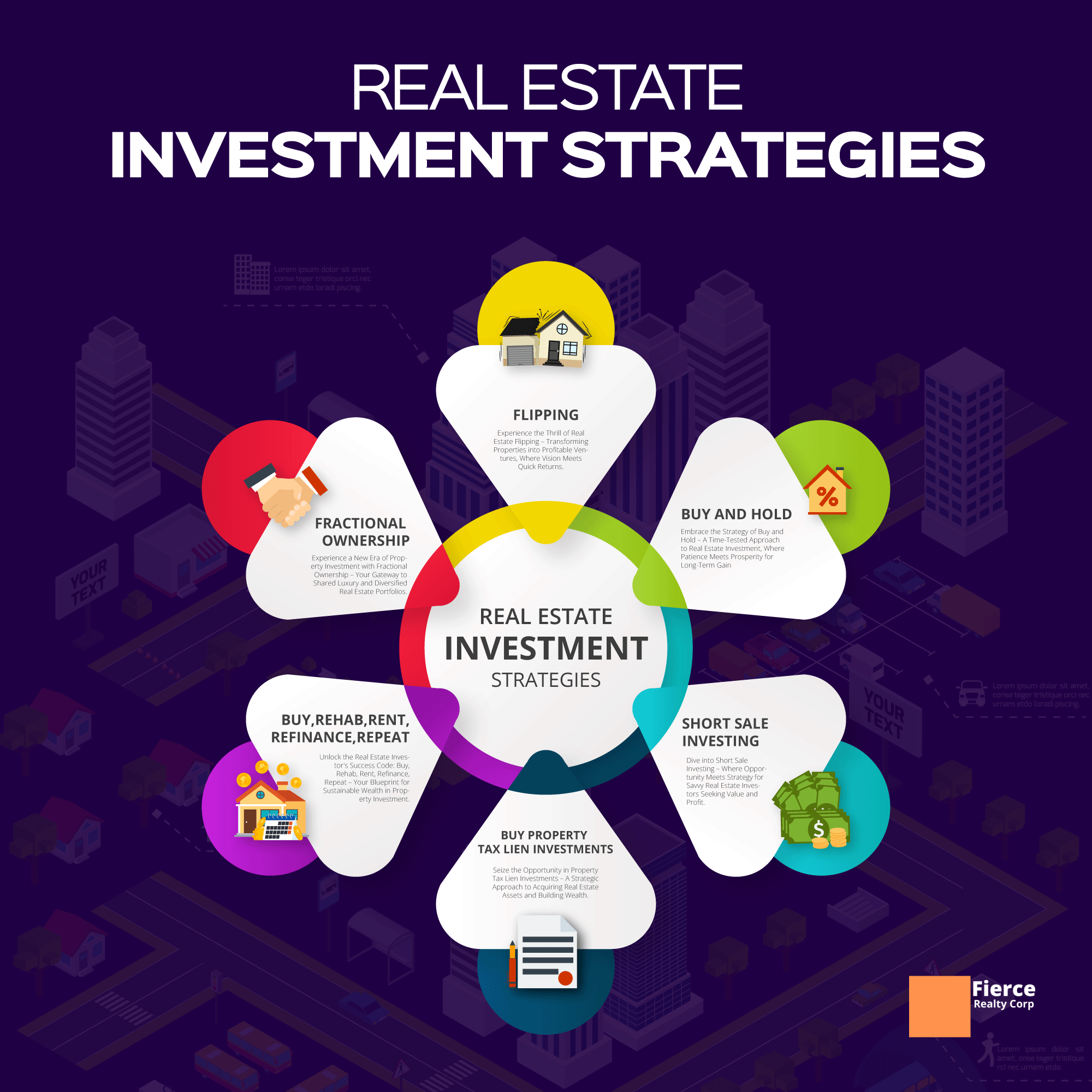
Buy and Hold
This concept is to purchase property and then hold it long-term. Often, this term relates to rental properties, but it’s not the complete picture. I’ve worked with several investors who buy properties in distressed areas and hold them until the neighborhood turns around. Similarly, these buyers do not fix up the property or rent them out. They do this with land, residential, or commercial properties. For instance, a few years ago, I was door-knocking, and I came across an investor who gave me eleven properties he had purchased fifteen years prior as a buy-and-held. Some of it was land and commercial property appreciated by over 100%.
Real estate manager and house flipping and management concept as a person juggling three homes as a residence manager or property agent managing a business challenge for profit.
Flipping
Most new investors always get this part wrong, so I highly recommend you avoid this as a beginner. So many areas can go wrong, and you could lose a lot of the money you saved. I can’t stress enough that it is best to initially stick with something low-maintenance and straightforward. Many new investors watch television flips and fix shows and get the false impression that they can make a lot of money and that it is easy. For example, most flippers only make about $10k per deal after 6-9 months of work. In the end, their hourly rate is way below minimum wage.
In conclusion, the idea is to buy below market price and sell at a higher price. The best place to search for these deals is in the distressed marketplace, including auctions, tax sales, foreclosures, and short sales.
Best Practices
Selecting a property that needs minimal work, such as new flooring and fresh paint, is ideal. However, when you do more significant projects like total renovations, which require all new systems and roofing, you look at a lot of cash upfront and meager profit.
One term to learn is the after-repair value (ARV), the home’s value once renovated. Unfortunately, new flippers lie to themselves about this number and often get stuck with renovated properties above the house’s value. So again, I can’t stress enough the need to be cautious when entering this investment strategy. I have seen way too many new-time flippers come and go, frequently falling into deep poverty because of bad decision-making.
Buy, Rehab, Rent, Refinance, Repeat (BRRRR)
This method is a rental property strategy. The concept is to purchase a rental property below market value and then repair the unit to at least a level D (minimal viable product). My top clients purchase the properties under market value, often from estate sales or divorce situations. For example, if the average home in the area is worth $300,000, they would purchase something between $100,000 and $200,000 to see the value immediately. Their next steps are to renovate as a rental-grade unit. The Rental grade unit uses inexpensive materials, used supplies, and restored materials and supplies purchased from thrift stores or Habitat for Humanity.
After the repairs, they market the home for rent. Finally, they thoroughly vet the tenant to minimize future evictions, holdover tenants, and other tenant/landlord filings.
Once the tenant is in place, the investor refinances the home based on the after-repair value (ARV) and retrieves the cash to purchase another property to repeat the process.
Using this method, you can earn income from renting the property, gain value from the property appreciating, and lastly, remove the equity to purchase other properties.
Short Sale Investing
Short-sale investing involves purchasing properties where the sale price is less than the amount owed on the mortgage. This situation typically arises when homeowners face financial distress and cannot maintain their mortgage payments. Short sales present an opportunity for investors to acquire below-market properties. However, this type of investment requires patience and due diligence. The process can be lengthy and complex, involving negotiations with lenders to accept less than the owed mortgage amount. Successful short-sale investors must possess a keen understanding of the market, strong negotiation skills, and the ability to navigate legal and financial intricacies. While potentially profitable, short sales also carry risks, such as the possibility of hidden property issues or prolonged negotiation periods, making thorough research and professional guidance crucial.
Buy Property Tax Lien Investments
Investing in property tax liens involves purchasing the right to collect unpaid property taxes from property owners. When property owners fail to pay their taxes, municipalities issue tax liens, which are then sold to investors. These investments can offer high returns, as property owners must pay the owed taxes, interest, and penalties, which the investor collects. However, this investment strategy requires thorough understanding and research. Risks include property devaluation and the possibility of property owners defaulting, potentially leading to complex foreclosure processes. Hence, investors must carefully assess the property’s value, location, and likelihood of repayment before investing in tax liens.
Fractional Ownership
Fractional ownership in real estate refers to a scenario where several unrelated parties can share in and mitigate the risks of owning a high-value tangible asset, such as property. This arrangement differs from a timeshare; fractional ownership involves an actual share in the right of the property, giving each owner a portion of the equity. It’s trendy in vacation properties, allowing owners to enjoy the luxury of a holiday home without bearing the full cost and responsibility of maintenance and management. Investors benefit from potential property appreciation and can often trade their time slots or rent out their portion, providing personal enjoyment and investment income.
Disclaimer
As a disclaimer, the rent has to be more than the expenses to earn income from renting properties. Some costs include mortgage, taxes, repairs, maintenance, and professional services.
Most Real Estate appreciates, but not all of it, and in some neighborhoods, the value of Real Estate can decline.
The ability to refinance and property depends on banking rules, credit, and the borrower’s capacity. Everyone’s financial situation is different, and the above is a general statement that may not apply to everyone. It is best to seek the help of a professional before attempting this method as an investment strategy.
How To Get Started Investing In Real Estate For Beginners
It’s time to move forward and create an action plan. Get in gear and follow the following eight steps to get started investing in Real Estate:
Save your money; remember, you need lots of cash.
Decide on your long-term goals.
Identify your Real Estate investing strategy, such as flipping vs. buying and holding.
Choose your market. Are you interested in major cities, rural areas, small towns, or farmland areas?
Do your due diligence, meaning check and double-check every deal aspect.
Select your lender and financing options
Shop for investment properties.
Hire a Professional Real Estate Brokerage and Property Management Firm
Popular Financing Options for Beginners
Cash from Personal Savings
Cash is King. It is an ideal way for beginners to purchase real estate, genuine estate investing. You have a more significant advantage and flexibility with price negotiations if you have cash instead of a loan. In addition, if you save as much money as possible from your employment income, tax refunds, commissions, and bonuses, you can grow your savings quickly.
Credit Cards
Home Equity/Line of Credit
Personal Loan
Seller/Owner Financing
Seller financing is when the owner agrees to hold the mortgage.
Retirement Savings (401K Plan)
A 401k plan is a retirement account that some of us in the United States can use to save our employment income.
A Federal Housing Administration Loan (FHA) is a loan backed by the Federal Government. It requires 3.5% as a down payment and a credit score of at least 580. For more information, check with your lender or other requirements.
Conventional Loan
A conventional loan is the Mercedes Benz of lending. It is an ideal loan product for borrowers with good credit, steady and consistent income, and savings.
Hard Money Loan (HML)
Hard Money Loans, or HML, are private loans with high-interest rates.
Private Lender
A private lender is an investor or family member who lends you money to purchase an investment property.
CrowdSource Funding
CrowdSource Funding is a private loan from one to several individuals or groups that come together to invest in your investment idea.
Prepare Yourself Financially
The other housekeeping issues that you must address for Real Estate Investing for beginners are the following:
Must Do:
Check your credit score. Lenders base their ability to get a mortgage on different criteria. It includes the amount of money you make and how much you are worth after calculating what you own after debt repayment. It is called your net worth. You will be surprised to learn that expensive furniture, cars, clothing, and electronics have no value once used, even if it’s only one day old. Your debt-to-income ratio ( how much you owe compared to how much you make), your savings, and lastly, how long you have maintained consistent employment at the same or similar job. Learning real estate math is very important.
Stop spending. It is essential to save as much as you can regularly. Automatic savings plans are the best options because they can be done without you even thinking about them. Sometimes, employers will even match what you save by a certain percentage.
Whatever you decide to do, please do it. Do not wait for the perfect opportunity. There is never an ideal opportunity to begin a savings plan. However, if you can only save $5 a month, that is a great start.
Do Not Do:
Don’t apply for new credit of any kind. Do not be fooled by credit card companies luring you in to apply for new credit cards or the sales clerk insisting that you apply for a store card for a 20% discount. These attempts to reel you in will only benefit the credit card company and not help you achieve financial independence.
Don’t close credit card accounts. Do not close any credit card accounts while applying for a mortgage. It can have a significant impact on your credit score.
Don’t max out existing credit cards. Keep your credit card balances below 30% because anything higher will lower your credit score.
Avoid consolidating debt.
Refuse to cosign on another person’s loan.
Do not change your address or change your name.
Don’t change your employer- stay at your job, even if you hate it while applying for a mortgage. Any change in your employment status will create a red flag. Probationary periods, career, or even status changes from salaried to a commissioned job or a leave of absence will harm your credit score.
Never pay late. -late payments will destroy your credit score and increase the balances you owe.
Do not deposit significant cash into your account unless you provide documentation and a complete paper trail.
Should Do:
Locate the last two years of your Federal Tax Returns with the W2
Have one month of the most recent pay stubs on hand.
Keep all bank statements on file and ready.
Locate divorce decrees and settlement agreements.
Pay your child support and locate child support orders.
Locate bankruptcy documents and discharge of debt notices called a 1099-C
Locate your DD214 if a veteran
Keep your driver’s license active and your social security card on file.
Prepare Yourself Emotionally
You may ask, what do emotions have to do with becoming financially confident or independent? That’s a great question. The answer is simple because it’s tough to do. If it were easy to become rich, more people would be rich. To travel down the road to success, you must take the path of the most significant resistance.
The Cost of Success
You will lose your current friends and some family members. They will call you crazy and other nasty names. Many will become jealous of you and begin to sabotage your efforts. Dream destroyers will try to force you to give up your dream. They may subject you to nuisance lawsuits to distract you and change your focus.
You will suffer extreme hardship trying to climb the mountain. Some days will be more difficult than others. Your life will be boring and mundane. You will miss some holidays, birthdays, and anniversaries, but not all.
Wrap Up
However, if you put together a strong armor around your soul, root yourself in whatever that may be, and maintain tunnel vision, you will succeed. There is light at the end of the tunnel. You will accomplish more than your peers; you will be celebrated and congratulated when you make it. So stay encouraged, and do not give up no matter what. Below are some things that help me stay emotionally intense, and I am sure it will also help you.
Tips
Create a Vision Board for Real Estate Investing for beginners with your dream life pictures pinned to it and all your accomplishments, no matter how small.
Write about your fears, dreams, accomplishments, and failures in a journal every day.
Pray for strength.
Please read about the struggles of others and how they had to overcome them.
Block out time once a month on your calendar for events with your family and friends so that you can still stay connected.
Learn how to say no! There are things you will not be able to do. Do not stretch yourself beyond your limits. Climbing the mountain of success requires time and a lot of energy. You cannot give that time and energy to other people or things.
Prepare
Take a break. It is okay to take a break and get away for a few days every other month to replenish your commitment and energy. I like weekend getaways to different cities alone or with a friend. I want to take a class to learn or improve an existing skill. Sometimes I relax at home for a few days. Once, I went out of the country to an island. I read and got some sun on the beach. When I returned, I felt recharged. You will feel refreshed as well. You will have the energy to work even more challenging.
Be Patient. Patience is a virtue and an absolute requirement in Real Estate Investing. You will need time to absorb all the information about Real Estate. It will take time for you to begin the process, and it will take time for you to generate enough income to live the lifestyle you envisioned.
Be Flexible. As you swim in the real estate world, you will meet different personalities. Some will be sharks. The chances of these people changing are slim to none. Therefore, you must change and adapt to get what you need from them.
Learn how to negotiate. “A closed mouth doesn’t get fed,” some elders may say. Skilled negotiators are like chameleons; they change to blend in and be accepted. Negotiation is a process in which you will improve only through experience. It can and will be frustrating, but eventually, you will get the hang of it, just like everything else. This is important for beginners in 159 Real Estate Investing.
Practice
Practice self-care. Find out what makes you relax. Spend time learning about the activities that make you feel calm. I enjoy having massages once a month, reading, having dinner and a movie, and taking long walks.
Whatever it is that helps you decompress, schedule it and be protective of that time slot, treating it with the same importance as any other appointment on your calendar.
Find a Support system. Identify the people you can depend on for emotional support in your life. Establish that they relate to your goals and plans and tap into them immediately. Several groups and forums on social media for real estate investing will support you. Join them now.
Be kind to yourself. Don’t dwell on your mistake. Instead, learn the lesson and keep on moving. Stay positive most of the time. Always look at the bright side. Think about what is going right instead of focusing on what is going wrong.
The best thing for beginners is to thoroughly read articles and books about real estate investing, not once but several times.
Read everything you can
At the end of this guide, you will find a list of must-read books you must purchase or borrow from the library.
Reading autobiographies and biographies of men and women who have accomplished greatness in their time is excellent.
Also, I read poetry for inspiration.
And lastly, read novels to help understand human nature.
Practice your grammar.
If necessary, take an English, grammar, and business writing class so that when you communicate in writing in your real estate investment business
you are speaking correctly and intelligently.
Read and study at least four hours a day.
Intelligence rules the world, and ignorance carries the burden. Read wherever you go, while waiting online, traveling, in the morning, at night, and while waiting on others. If you read one book a week, you would have read 52 books for the year, mainly about Real Estate Investing for beginners.
Easy Access: Mobile apps provide convenient access to property listings, documentation, and investment tools.
8. 3D Printing in Construction:
Cost-Effective Building: 3D printing lowers construction costs and time, potentially revolutionizing building processes.
9. Green Technology:
Sustainable Investments: Incorporate green tech for energy-efficient buildings, appealing to environmentally conscious buyers.
10. Real Estate Investment Platforms:
Online Investment: Platforms facilitate crowdfunding and fractional ownership, democratizing real estate investing.
By integrating these technologies, the real estate industry in 2024 can offer enhanced experiences to buyers, sellers, and investors, making processes more efficient, secure, and accessible.
Environmental Considerations in Real Estate: Sustainable Practices for 2024
1. Eco-Friendly Construction Materials:
Emphasize using sustainable building materials that reduce environmental impact, such as bamboo, recycled steel, and reclaimed wood.
2. Energy Efficiency:
Focus on properties with energy-efficient features like solar panels, high-efficiency HVAC systems, and LED lighting.
Encourage energy audits to identify and rectify energy inefficiencies.
3. Water Conservation:
Implement water-saving fixtures and landscaping practices that minimize water usage.
4. Green Certification Programs:
Highlight properties with certifications like LEED, Energy Star, or WELL, showcasing commitment to environmental stewardship.
5. Smart Home Technologies:
Utilize smart home systems for efficient energy and resource management.
6. Sustainable Community Planning:
Invest in properties in communities with sustainable practices, like green spaces, community gardens, and efficient public transportation.
7. Waste Reduction Initiatives:
Encourage practices that reduce waste during construction and renovation, such as recycling and using materials with minimal packaging.
8. Climate Resilience:
Investing in properties that withstand extreme weather events and rising sea levels is a factor in the impact of climate change.
9. Educating Buyers and Investors:
Provide information on the benefits of investing in environmentally friendly properties, including potential cost savings and increased property value.
10. Green Financing Options:
Explore financing options that offer incentives for investing in eco-friendly properties, like reduced interest rates or grants.
Incorporating these environmental considerations can contribute to a healthier planet and offer long-term economic benefits for investors, making it a vital component of real estate investing in 2024.
Conclusion
Real Estate investing can be a daunting task for beginners. But now that you know the basics of the Real Estate Investing business, you may wonder why you didn’t start much sooner. With cash flow, growth, and some tax benefits, it’s easy to understand why many beginners learn to become experts and never look back.
The wide variety of options is the most exciting thing about real estate investing for beginners. It also has a low barrier to entry. If you have been considering investing in Real Estate, now is the time to do something. The best thing that can happen is you become financially confident. Before you start, hire a professional so you can minimize your risk. Now you have 17 real estate investment ideas to kick off your plunge into the beautiful world of Real Estate, and there is nothing that can prevent you from building wealth and having an exciting future. Look for more ideas on creative financing and pitfalls that can trip you up. Best of luck, and email me about your success.
P.S. Check out our real estate shop where you can find the best real estate investment books and other trendy items.
Welcome; wipe your feet as you step into the house. Yes, I am a Peter Gunz fan, And if you do not know Peter Gunz, that’s okay, too, because I ruined the rhyme terribly. Anyhoo, in Real Estate, listings are like GOLD! You will have difficulty surviving as a Real Estate Agent if you do not have at least seven to fifteen listings in your monthly inventory. You will most likely burn out from shuffling around buyers on nights, weekends, and holidays with little to no enjoyment of the incredible profession.
How To Get Real Estate Listings
I will show you how to get a Real Estate listing. I love real estate as a career because from the beginning, I knew I should focus on becoming a listing agent instead of a buyer agent, and after seven hours on my first day of work, I landed my first listing and never looked back. Learn how to become a listing agent or tweak your listing skills this year.
Goals and Actions
It is crucial to begin the year as a Real Estate Agent, focused on goals and action items. Getting Real Estate Listings is vital to the survival of your career. Many agents burn out after achieving lackluster results because they do not understand Real Estate as a career. They are confused as to their priorities. The number one goal should be getting real estate listings. Below are four easy ideas for getting real estate listings quickly and quickly.
Sell To Your Database
Every business collects data on their potential customer to analyze for marketing purposes. For example, have you ever gone to a retail store, and they ask you for your zip code? Have you ever called to get a plumbing quote, and they asked you for your email address? Have you ever called your dentist and were asked for your cell phone number and provider?
Did any business ask for your blood type and firstborn? Yup, I’m just checking to see if you are still reading, and if they want my firstborn and youngest born, I will be glad to deliver with a bow. LOL. All joking aside, database collection is big business; if you are not doing it, you are not thinking like an owner.
First, you should create a list of people you know, family and friends, and people you work with to add to your CRM. I use Mailchimp, but you can decide what is best for you and your business. Next, you should send updates on the market, news, or tips that you believe are useful. The above is my opinion on how to get real estate listings quickly. The more complicated method is below.
Expired Real Estate Listings
Landvoice is an expired listing lead source within your MLS. After signing up, you can receive leads in your inbox every day. Cold Call the leads or hire an Internal Sales Agent or Cold Caller to make the calls for you and schedule appointments. Doing this for 1 – 3 hours daily will give you seven to 15 monthly listings.
Why should you target expired listings? You should call expired listings daily because they want to sell their home simultaneously. Because of something that went wrong, the sale of their home did not happen, but this does not mean they have given up. They, most likely, want to sell their home, and they are looking for a professional who can get it done. That is where you come in. However, you must plan to do it quickly and be creative. Their home did not sell the first or second time for a reason. After creating a method and an innovative strategy, set the appointment and get the real estate listing.
Try not to spend time on useless, busy work like updating your website, redesigning your business cards, or cleaning up your email. Of course, those are worthy projects, but I don’t recommend spending any work hours on them. Instead, I recommend making calls 1-3 hours daily, six days weekly. Not everyone has the charisma to dominate cold calling, but cold calling is a quick way to get a sale immediately.
Here is how you get real estate listings in the year. Stay tuned for future articles on the best script to use for cold calling.
FSBO’s Real Estate Listings
For Sale By Owners is the next option for getting a real estate lead. It is the same concept as calling expired listings, except you have individuals or couples open to talking about their homes and meeting you in person. After all, they have their home listed on the market. They want to sell, and they love to talk.
The most effective way of working with FSBOs is to call and schedule a showing to tour the home. The process to get the showing tour is leisurely because the house is on sale. I advise that you disclose that you are a real estate agent. However, you do not have to tell that you want to get the Real Estate Listing. After viewing the home, you may decide that the house is not worthy of your inventory, an illegal sale, or a personality conflict with the owner. However, if the home qualifies to be listed, give your listing presentation in person. You will win the listing if you are confident and have an excellent presentation. If not, move on to the following listing and follow up with the FSBO regularly.
Here is how you get real estate listings. So stay tuned for future articles on the best script to use on FSBO.
Yes, farm your neighborhood. No, I am not talking about plowing the land. I am talking about sending market update postcards, letters, gifts, or recipes to a local market you have identified every month. “Offrs” makes it easy by finding sellers likely looking to sell within the next 12 months. They do this by using artificial intelligence. It’s a simple process and more affordable than farming an entire area blind. It is another easy way to get real estate listings.
Some agents are intimidated or afraid of the phone. However, if you have the cash to invest and time to wait, using artificial intelligence to identify a willing seller is a great opportunity.
Lastly, farming your area can also include a hyperlocal website like Parkbench. Parkbench is a concept of interviewing local business owners twice a month and sending it out on social media. Technically, you can do this on your own and put it on your social media account, but park bench has website credibility you may not have.
Wrapping Up
Getting a listing is the best way to last as a Real Estate Agent. I described some easy and not-so-easy ways of getting Real Estate Listings. When you look at your bank account, whichever method you choose will prove fruitful to you at the end of the year. To make 6-fig per year, you should have seven to fifteen listings at any time.
Either way, do something by getting into action. Contact me for a free strategy call.
As I said earlier, Listings are GOLD. Best of luck!
5 Things To Do Now To Help Your Real Estate Career. In the dynamic world of real estate, staying one step ahead can make all the difference. Whether you’re just starting or you’ve been in the game for years, there are key actions you can take to elevate your career. Here are five crucial steps you should consider now to help boost your real estate career.
5 Things To Do Now
Invest in Continued Education
Stay Updated: Real estate is a continually evolving field. By regularly attending workshops, seminars, and courses, you can stay updated on the latest market trends, laws, and technologies.
Specialize: Consider acquiring certifications in commercial real estate, luxury homes, or green living. Specializations can distinguish you from competitors and appeal to a niche market.
Networking: Educational events are also fantastic networking opportunities. Meeting fellow professionals can lead to referrals, partnerships, and valuable advice.
Leverage Technology
Embrace Social Media: Platforms like Instagram, LinkedIn, and Facebook can be instrumental in showcasing properties, sharing testimonials, and building your personal brand.
Use Modern Tools: Virtual tour software, customer relationship management (CRM) systems, and mobile apps can streamline your operations and provide a richer experience for your clients.
Stay Adaptive: The tech landscape is always changing. Be open to adopting new tools that can give you an edge.
Build Your Personal Brand
Find Your Unique Selling Proposition (USP): Determine what separates you. Maybe it’s your in-depth local knowledge, unmatched negotiation skills, or commitment to sustainability. Highlight this in your marketing.
Content Creation: Start a blog, YouTube channel, or podcast. Sharing valuable content can position you as an expert in your field.
Consistency is Key: From your online profiles to business cards, ensure consistent branding. It helps in building recognition and trust.
Engage with the Local Community
Attend Local Events: Join local chambers of commerce, attend town hall meetings, or participate in community service. It positions you as a community insider and is great for networking.
Sponsorships & Partnerships: Consider sponsoring local sports teams, charity events, or festivals. This not only aids your community but also boosts your visibility.
Stay Informed: Knowing about upcoming infrastructure projects or community events can give you an advantage. It shows clients you’re in the know about local happenings.
Seek Mentoring and Collaboration
Find a Mentor: No matter where you are in your career, there’s always something to learn. A mentor can provide guidance, share experiences, and offer constructive feedback.
Collaborate: Collaborate with fellow agents for open houses or co-listing properties. It can expand your reach and offer clients a broader skill set.
Feedback Loop: Regularly solicit feedback from clients and colleagues. It’s a gold mine for improvement and growth.
Wrapping Up
Success in real estate doesn’t happen overnight. It culminates consistent efforts, learning, and adapting to the ever-changing landscape. Focus on the five things to do now to help your real estate career. By investing in education, embracing technology, building a strong personal brand, engaging with your community, and seeking mentorship, you’re laying a solid foundation for a flourishing real estate career. Take these steps today, and watch your career trajectory soar!
Introduction: Goals and Affirmations: Unlocking Real Estate Success
Goals and Affirmations: Unlocking Real Estate Success. Setting goals and cultivating a positive mindset is essential for success in any career, including real estate. In this blog post, I’ll explore the transformative power of goals and affirmations in propelling your real estate career forward. By setting clear, actionable goals and reinforcing them with empowering affirmations, you’ll unlock your potential, stay focused, and manifest your desired success.
Setting SMART Goals:
First, set SMART goals to begin your journey toward real estate success. Specific, Measurable, Achievable, Relevant, and Time-bound goals provide a roadmap to follow. Identify your desired achievements, break them into smaller milestones, and create actionable steps to reach them. SMART goals keep you focused, motivated, and accountable throughout your real estate journey.
Harnessing the Power of Affirmations:
Next, affirmations are positive statements that rewire your mindset and strengthen your belief in your abilities. Incorporate empowering affirmations into your daily routine to cultivate a success-oriented mindset. Repeat affirmations such as “I am a successful real estate professional,” “I attract lucrative opportunities,” and “I am confident in my abilities.” These affirmations reinforce your goals and align your thoughts with achieving real estate success.
Visualize Your Success:
Visualization is a powerful tool to manifest your desires. Take time to imagine yourself achieving your real estate goals vividly. Visualize successful client interactions, closing deals, and surpassing your targets. By harnessing the power of visualization, you activate the Law of Attraction and attract opportunities that align with your aspirations.
Overcoming Limiting Beliefs:
Furthermore, identify and challenge limiting beliefs that may hinder your real estate success. Replace self-doubt and negative thoughts with positive affirmations. Cultivate a growth mindset by reframing challenges as opportunities for growth. Embrace the belief that you have the skills, knowledge, and determination to succeed in the real estate industry.
Track Progress and Celebrate Milestones:
Monitor your progress towards your goals and celebrate milestones along the way. Regularly assess your achievements, adjust your strategies if necessary, and acknowledge your hard work. Celebrating milestones boosts your motivation, reinforces positive habits, and fuels your drive toward greater success.
Conclusion:
Setting goals and incorporating affirmations into your real estate career can unlock your full potential and pave the way for extraordinary success. You’ll stay focused, motivated, and aligned with your aspirations by setting SMART goals, rewiring your mindset with positive affirmations, visualizing your success, and celebrating milestones. Start harnessing the power of goals and affirmations today and embark on a transformative journey toward real estate excellence.
PS:
When I was sick, I wrote down my goals for my future. It’s so amazing that I’m living those goals today. Several years ago, I wrote down that I wanted to be a broker-owner, have my own business, take care of my family, and leave a legacy for my children.
Studies show that people who write their goals are 90% more likely to accomplish them. Writing down your goals and aspirations is a surefire way to succeed in this career. If you don’t, you will have a much more difficult time.
If you have any questions about goal-setting or anything related to the real estate business, please contact me.